About us
Caring for people without harming the planet: ecology at our clinic
Health care itself leaves a noticeable environmental footprint. Here is what we already do and what we are working towards.
Why it matters for a clinic
According to Health Care Without Harm, health care accounts for about 4.4% of global greenhouse gas emissions; if it were a country, it would be the world's fifth-largest emitter [1]. A study in The Lancet Planetary Health confirms that the sector's footprint covers not only energy but also waste, water and supply chains [2].
Clean air and water are part of health too. For us, ecology is a continuation of caring for patients.
What we already do
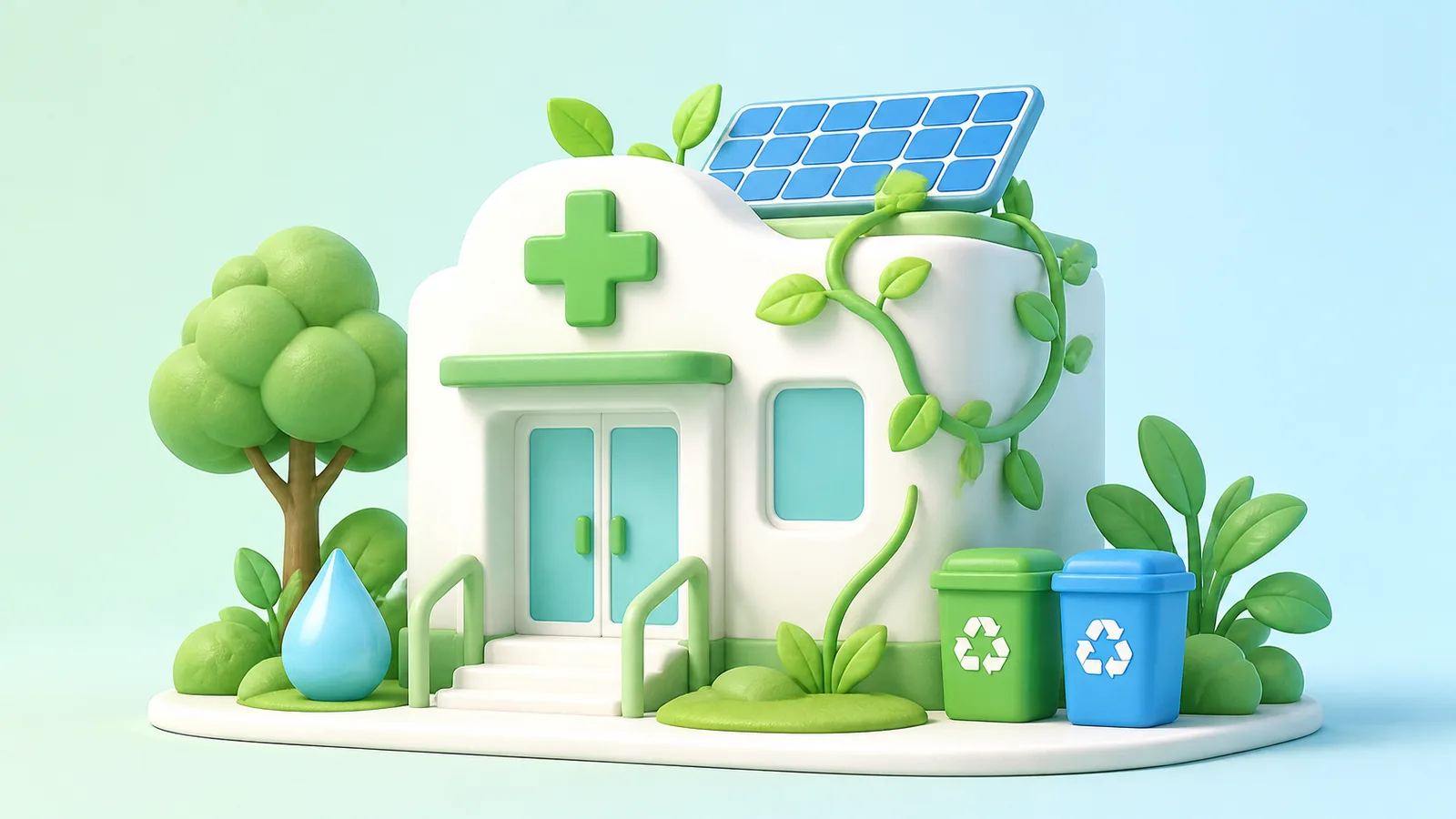
- We collect medical waste separately and hand it over for disposal under sanitary regulations, protecting both people and the environment.
- The whole treatment journey is in one building: patients don't have to travel between a lab, an X-ray unit and a hospital, which means fewer car trips and less exhaust.
- Booking, reminders and answers to questions are online, via the website and our Telegram bot: less paper and fewer unnecessary visits.
- Our X-ray system is digital, so images are stored electronically without film or chemical developers.
What we are working towards
- Using less electricity and water through energy-efficient equipment and lighting.
- Cutting paper-based paperwork.
- Choosing suppliers who take packaging and the environment seriously.
- Building environmental requirements into the design of new clinics.
Sources
- Health Care Without Harm, Arup. Health care's climate footprint: how the health sector contributes to the global climate crisis and opportunities for action. 2019. global.noharm.org
- Lenzen M, Malik A, Li M, et al. The environmental footprint of health care: a global assessment. The Lancet Planetary Health, 2020;4(7):e271–e279. pubmed.ncbi.nlm.nih.gov