ACL tear: is surgery always needed?
An ACL tear is one of the most common sports injuries of the knee. We look at what the well-known KANON randomised trial showed and how doctors choose between rehabilitation and ligament reconstruction.
What the ACL is and how it tears
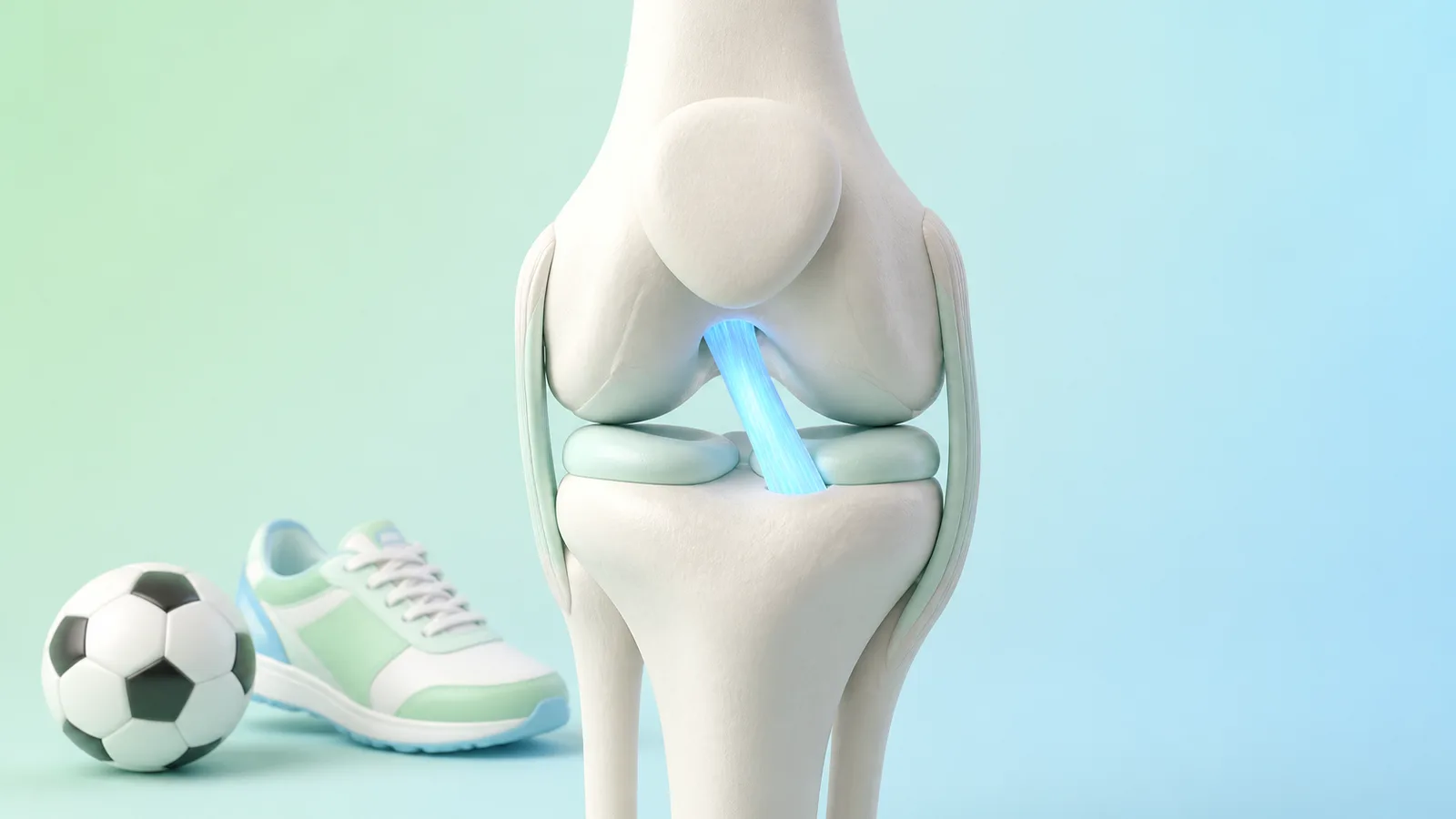
The anterior cruciate ligament stops the shin bone from sliding forward and keeps the knee stable when you turn. It usually tears without a direct blow — during a sudden stop, a pivot on a planted foot or an awkward landing. Patients often recall a pop, rapid swelling and a feeling that the knee gives way.
What the KANON trial showed
The Swedish KANON randomised trial included 121 young, active adults aged 18–35 with an acute ACL tear. One group had ligament reconstruction within 4–6 weeks of injury plus rehabilitation; the other had structured rehabilitation alone, with the option of surgery later [1].
After two years, knee function, activity level and well-being did not differ between the groups. However, about 40% of the rehabilitation group still needed a delayed reconstruction [1].
When doctors are more likely to recommend surgery
- the knee stays unstable despite rehabilitation;
- you play sports with jumping and pivoting and want to return to your previous level;
- the meniscus or other structures are damaged along with the ligament.
How we treat it at Gavhar Clinic
The doctor examines the knee, tests its stability and, if needed, orders a joint ultrasound. If surgery is indicated, the ligament is reconstructed arthroscopically through small incisions. Whether after surgery or with conservative treatment, rehabilitation takes place in our own rehab gym.
Sources
- Frobell RB, Roos EM, Roos HP, Ranstam J, Lohmander LS. A randomized trial of treatment for acute anterior cruciate ligament tears. New England Journal of Medicine, 2010;363(4):331–342. doi.org
This article is based on scientific publications and clinical guidelines. It does not replace a consultation with a doctor.