
The first weeks after joint replacement: what to expect
Replacing a hip or knee is not just an operation — it is a recovery. The sooner and the more correctly you start moving, the faster you get back to normal life.

Up on day one
A review of randomised trials found that when patients sit up within 24 hours and start walking within 48 hours of joint replacement, they go home 1.8 days sooner on average — with no increase in complications [1].
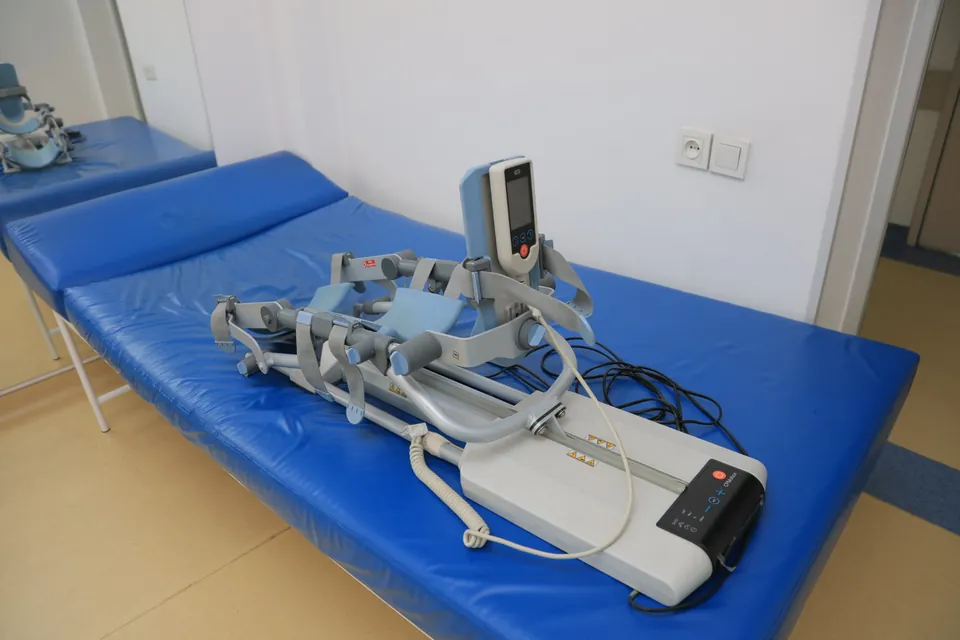
Before you go home
The American Academy of Orthopaedic Surgeons (AAOS) lists the signs that a patient is ready for discharge: walking confidently with a walker, crutches or a cane on level ground, and managing 2–3 stairs [2].
The first weeks at home
- Keep doing the exercises your physiotherapist showed you for at least two months after surgery [2].
- Swelling is a normal part of recovery and can last 3–6 months [2].
- There will be good days and bad days. The key rule: don't do too much too soon [2].
- You will need help at home for several days to several weeks.
Which activities help
- Walking at your own pace — but it does not replace your prescribed exercises.
- Swimming, once the wound has healed.
- Cycling and other low-impact sports.
Running, jumping and downhill skiing put too much stress on the new joint, so they are best avoided [2].
Sources
- Guerra ML, Singh PJ, Taylor NF. Early mobilization of patients who have had a hip or knee joint replacement reduces length of stay in hospital: a systematic review. Clinical Rehabilitation, 2015;29(9):844–854. unisa.edu.au
- American Academy of Orthopaedic Surgeons. Activities after knee replacement. OrthoInfo. www.orthoinfo.org
This article is based on scientific publications and clinical guidelines. It does not replace a consultation with a doctor.